he S12 World Championship didn't just deliver a new champion—it flipped the script on what competitive League of Legends could look like. When DRX, a fourth seed from the LCK, hoisted the Summoner's Cup after a 3-2 nail-biter against T1, the narrative wasn't about dominance. It was about resilience. I've covered every Worlds since 2014。and I can't recall a finals where the underdog's path felt so improbable. DRX had to claw through the play-in stage, upset tournament favorites, and stare down a T1 roster stacked with legends. That they won isn't just a feel-good story;
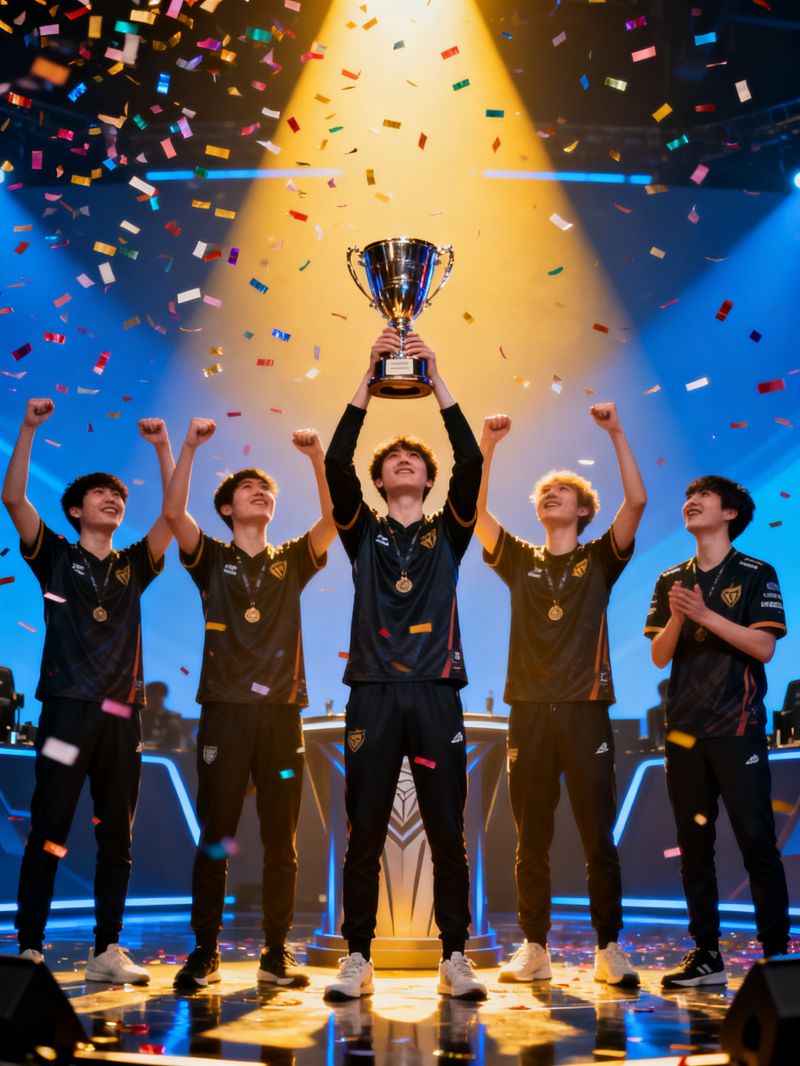
it's a data point that the gap between top-tier teams and challengers has never been thinner.The S12 World Championship meta shifted faster than any analyst predicted. Early on。teams prioritized utility junglers like Maokai and Sejuani, hoping to control objective fights. By knockouts, the priority flipped to carry junglers—Viego, Graves—and lane-swap strategies that punished slow rotations. What stood out to me was how DRX's drafting adapted mid-series. In the finals, they abandoned their comfort picks and put BeryL on unconventional supports like Heimerdinger. That flexibility wasn't just clever;it exposed a weakness in T1's rigid approach. The S12 World Championship rewarded teams that treated draft as a live conversation, not a pre-scripted plan.Individual performances defined the S12 World Championship in ways stats can't fully capture. Deft, at 26, finally lifted the trophy after a decade of near-misses—his Caitlyn in game five was a masterclass in positioning under pressure. On the other side, Faker's Azir nearly willed T1 to victory, but one misstep in the final teamfight cost them. I keep coming back to Kingen's Aatrox. He wasn't the flashiest top laner in the tournament, yet his flank in the decisive moment felt inevitable. These aren't just highlight-reel plays;they're reminders that the S12 World Championship is decided by split-second decisions。not just macro strategy.Viewership numbers tell another story. Peak concurrent viewers hit 5.1 million, a record for any esports event at the time. That growth didn't happen by accident. Riot's production value—the drone shots, the augmented reality openings, the player cams—made the S12 World Championship feel like a spectacle without overshadowing the gameplay. But here's my honest take: the broadcast's over-reliance on pre-recorded segments during pauses disrupted momentum. Still, the in-game observer work improved dramatically。
catching rotations that previous years missed. The S12 World Championship set a new bar for how to present a live esport, even if it wasn't flawless.Looking ahead, the S12 World Championship leaves a messy legacy. DRX's win proved that regional seeding means little once you're on stage. It also exposed how quickly meta reads can become obsolete—teams that stuck to one style (looking at you, LPL's early exits) paid the price. I wouldn't call this tournament a paradigm shift;
it's more of a warning. The S12 World Championship showed that preparation and adaptability matter more than raw star power. And if you doubt that, rewatch DRX's run. It's not a fluke. It's a blueprint.